
For many women, the first response to feeling uncomfortable in their body is to eat less.
Less breakfast.
Less bread.
Less dinner.
Less snacking.
Less pleasure.
Less trust.
At first, it can feel like the most logical solution. If you want to lose weight, feel lighter, or “get your metabolism back,” eating less seems like the obvious place to begin.
And yes, calorie balance matters.
But the story is not that simple.
Especially for women in their 30s and 40s, eating less is not always better for your metabolism. In fact, eating too little for too long can leave you feeling tired, hungry, cold, irritable, unmotivated, poorly recovered, more obsessed with food, and less able to maintain muscle.
It can also make healthy habits harder to sustain.
This does not mean you need to eat endlessly or ignore your goals. It means your body is not a calculator. It is a living system that responds to energy, stress, sleep, hormones, movement, muscle, and nourishment.
Sometimes, the most supportive thing you can do for your metabolism is not to eat less.
It is to eat better.
More consistently.
With enough protein.
With enough energy.
With enough respect for the body you are asking so much from.
If you are new to this topic, you may want to read Metabolic Health for Women Over 35: A Simple Guide first. This article builds on that foundation and looks at why restriction is not always the answer.

First, Let’s Be Clear: Calories Still Matter
Before we go deeper, let’s be honest.
Calories matter.
If your goal is fat loss, your body generally needs to be in an energy deficit over time. That means you are using more energy than you are taking in.
But this is where many women get stuck: they hear “calorie deficit” and translate it into “eat as little as possible.”
That is where things begin to unravel.
A moderate, well-designed calorie deficit can be useful for some goals. But aggressive restriction, repeated dieting, and chronically under-eating can create a very different outcome.
Your body may respond by reducing energy expenditure, increasing hunger, lowering spontaneous movement, worsening recovery, and making consistency much harder. Research on adaptive thermogenesis shows that weight loss can be accompanied by a larger-than-expected reduction in energy expenditure, meaning the body may burn fewer calories than predicted after weight loss.
So the issue is not that eating less “never works.”
The issue is that eating too little, for too long, without enough protein, strength training, sleep, or recovery, often works against the very metabolism you are trying to support.
Why “Just Eat Less” Is Too Simple
The advice to “just eat less” ignores the complexity of women’s bodies.
It ignores:
- muscle mass
- hormones
- sleep
- stress
- blood sugar
- recovery
- appetite regulation
- menstrual cycles
- perimenopause
- dieting history
- emotional relationship with food
- daily movement outside the gym
It also ignores real life.
A woman who is sleeping six hours, working under pressure, caring for others, training hard, and skipping meals does not need another layer of restriction. She likely needs a better foundation.
The body is always trying to protect you.
When it receives too little energy for too long, it may begin to conserve. You may feel less energetic, move less without realizing it, crave more quick fuel, and recover poorly from workouts.
This is not a lack of discipline.
It is physiology.
What Happens When You Eat Too Little for Too Long?
Eating too little occasionally is not the problem. We all have busy days, disrupted routines, or meals that are lighter than usual.
The concern is chronic under-eating.
When your body repeatedly receives less energy than it needs, especially while also dealing with stress, exercise, poor sleep, or hormonal shifts, several things can happen.
Let’s walk through them.
1. Your Body May Reduce Energy Expenditure
Your body uses energy for many things beyond exercise.
It uses energy to breathe, think, digest, regulate temperature, repair tissue, move through your day, produce hormones, and keep you alive.
When you diet aggressively, your body may respond by becoming more efficient. In simple terms, it may start using less energy.
This is part of adaptive thermogenesis.
It does not mean your metabolism is “broken.” It means your body is adapting to reduced energy availability.
This can show up as:
- feeling colder than usual
- lower energy
- reduced motivation to move
- more fatigue during workouts
- feeling sluggish
- less spontaneous activity
- a weight-loss plateau despite continued restriction
The frustrating part is that many women respond to this by eating even less.
But if the body is already conserving energy, pushing harder may not be the most effective next step.
Sometimes the better question is not, “How can I cut more?”
It is, “Where is my body under-supported?”
2. You May Lose Muscle
Muscle is one of your greatest metabolic assets.
It helps your body use glucose, supports insulin sensitivity, improves strength, protects your joints, supports posture, and helps you feel capable as you age.
When you eat too little — especially without enough protein or resistance training — the body may lose not only fat, but also lean tissue.
This matters deeply for women over 35.
Muscle already becomes more important with age, and preserving it is one of the foundations of healthy metabolism. Protein intake and resistance training are both important for supporting muscle repair and adaptation; sports nutrition research commonly recommends distributing quality protein across meals, often around 20–40 grams per serving depending on body size, age, and training context.
If you are dieting but not eating enough protein or strength training, you may become smaller but not necessarily stronger, more energized, or metabolically healthier.
This is why weight loss alone is not the whole picture.
Body composition matters.
Strength matters.
Energy matters.
How you feel matters.
For more on this, read Why Protein Matters More as You Age and How Much Protein Do Women Over 35 Really Need?.
3. Your Hunger and Cravings May Increase
If you have ever tried to eat very little during the day and then felt out of control at night, you are not alone.
This is not always emotional eating.
It is often biological eating.
When the body does not receive enough energy, it will eventually ask for it.
Sometimes loudly.
You may notice:
- intense cravings for sugar or carbohydrates
- grazing in the evening
- thinking about food constantly
- feeling unsatisfied after meals
- waking up hungry
- feeling anxious when food is delayed
- eating quickly or past fullness after restriction
This does not mean you lack willpower.
It may mean your body has been underfed.
Many women try to be “good” all day with coffee, a small breakfast, a light salad, and very little protein — then blame themselves for feeling snacky at night.
But the body is intelligent.
If you under-fuel it earlier, it often tries to catch up later.
This is why a proper breakfast, a satisfying lunch, and enough protein can feel so stabilizing.
If cravings are a pattern for you, read Cravings, Blood Sugar, and Stress: The Connection Explained and High-Protein Snacks That Actually Keep You Full.

4. Your Training and Recovery May Suffer
Exercise is a form of stress.
A useful stress, yes.
But still a stress.
When you strength train, walk, run, do Pilates, lift weights, or complete a hard workout, your body needs energy to recover and adapt.
If you are eating too little, your workouts may begin to feel harder and less productive.
You may notice:
- weaker lifts
- poor endurance
- more soreness
- lower motivation
- longer recovery time
- poor sleep after intense workouts
- more injuries or niggles
- feeling drained instead of energized
This is especially relevant for women trying to improve body composition.
You cannot build or preserve muscle well if you are constantly under-fueled.
Training is the signal.
Food is the material.
Recovery is where adaptation happens.
If one of those pieces is missing, the result is often frustration.
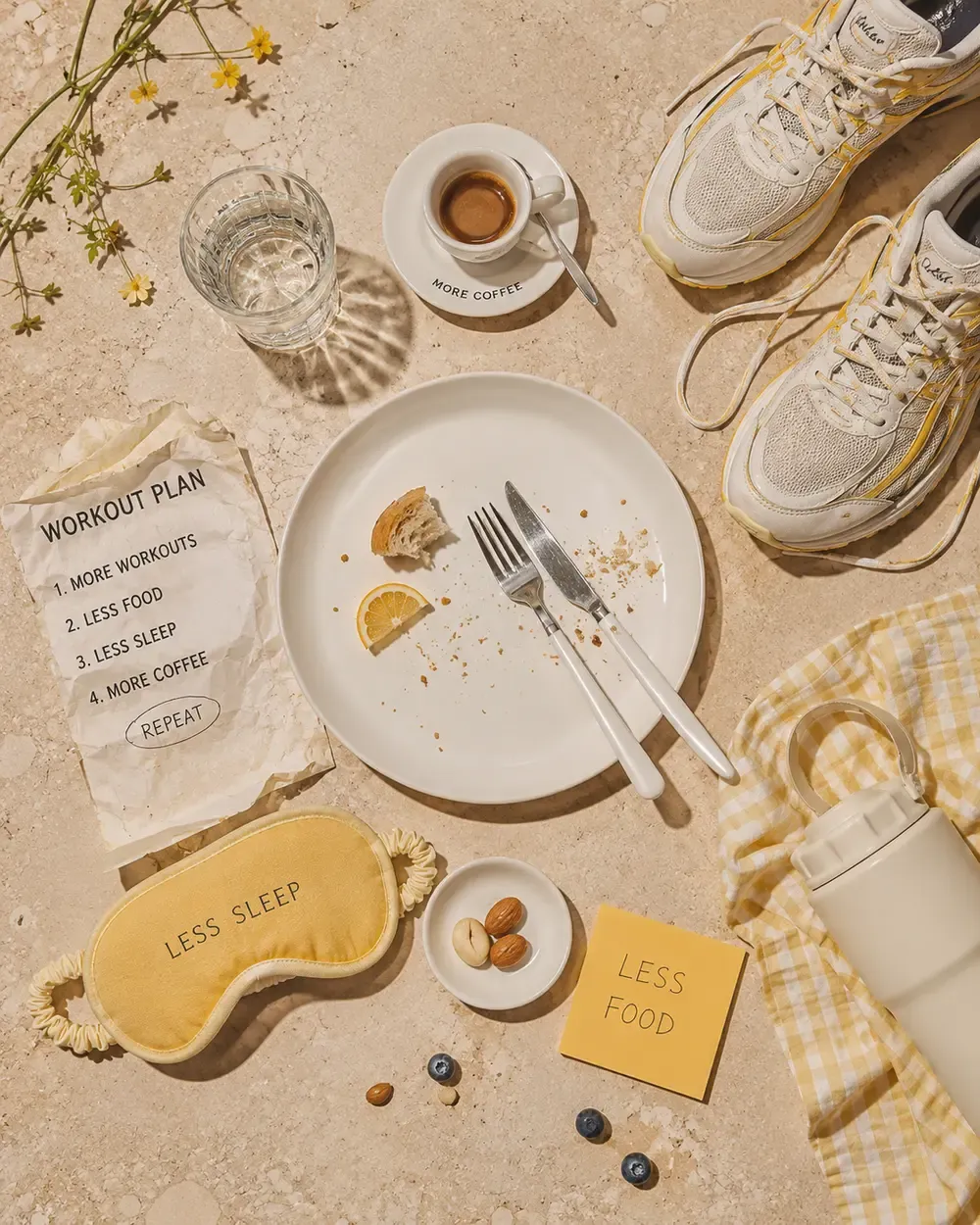
This is why eating less and exercising more is not always the elegant answer. Sometimes it becomes a stress pile.
Less food.
More workouts.
Less sleep.
More cravings.
Less recovery.
More frustration.
A metabolism-supportive approach asks a better question:
What level of training can I recover from well, and what food supports that?
5. Hormones and Your Cycle May Be Affected
Women’s bodies are sensitive to energy availability.
Energy availability means the energy left for your body’s normal functions after exercise and daily activity are accounted for. When energy availability is too low, the body may reduce support for functions it does not consider immediately essential.
This can include reproductive function.
The Endocrine Society’s clinical guideline on functional hypothalamic amenorrhea notes that energy deficit can come from reduced food intake, increased exercise expenditure, or both. It also highlights energy availability as an important factor in menstrual disruption.
This does not mean every missed or irregular period is caused by under-eating. Hormonal changes can have many causes and deserve proper medical evaluation.
But it does mean that chronic restriction, especially combined with intense exercise or high stress, can affect the hormonal environment.
Possible signs of low energy availability may include:
- irregular or missing periods
- low libido
- feeling cold
- fatigue
- poor recovery
- mood changes
- sleep disruption
- increased injuries
- hair shedding
- feeling constantly depleted
For women in their late 30s and 40s, this can be confusing because perimenopause may also begin to influence cycle patterns, sleep, mood, and body composition.
This is one more reason not to respond to every body change with stricter dieting.
Sometimes your body needs investigation.
Sometimes it needs nourishment.
Often, it needs both.
6. Your Daily Movement May Drop Without You Noticing
When people think about metabolism, they often think about workouts.
But your body also uses energy through non-exercise activity: walking around the house, standing, cleaning, carrying groceries, fidgeting, taking stairs, and moving through daily life.
This is often called NEAT, or non-exercise activity thermogenesis. It refers to energy used for spontaneous physical activity that is not formal exercise.
When you eat too little, this type of movement can quietly decrease.
You may sit more.
Walk less.
Feel less expressive.
Take the elevator.
Skip errands.
Avoid movement without noticing.
Your body is conserving.
So even if you are doing structured workouts, your total daily movement may drop. This can make the “eat less, move more” approach less effective than it looks on paper.
A better approach is to fuel enough so you have the energy to live your life actively.
Not just survive your workouts.
7. Your Mood, Focus, and Sleep May Feel Worse
Under-eating does not only affect the body. It affects how you experience your day.
Many women notice that eating too little makes them:
- more anxious
- more irritable
- less patient
- less focused
- more emotionally reactive
- more preoccupied with food
- less able to sleep deeply
- more likely to wake during the night
This makes sense.
Your brain needs energy. Your nervous system needs support. Your hormones need raw materials. Your muscles need fuel. Your body is not separate from your mood.
If you are trying to build a calmer, more resilient life, chronic restriction may not be helping.
You may not need more control.
You may need more stability.
Why This Matters More for Women Over 35
After 35, several factors can make under-eating less forgiving.
These may include:
- gradual changes in muscle mass
- higher stress load
- more responsibilities
- poorer sleep quality
- early hormonal shifts
- dieting history
- reduced recovery capacity
- less daily movement
- more sensitivity to blood sugar swings
This does not mean your body becomes fragile.
It means your body may require more intelligent care.
In your 20s, you may have been able to skip meals, sleep poorly, do intense workouts, and still feel fine. In your 30s and 40s, the cost of those habits can become more obvious.
Your body may begin asking for:
- more protein
- more strength training
- more consistent meals
- better sleep
- less stress load
- more recovery
- more stable blood sugar
- fewer extremes
This is not aging as decline.
It is aging as feedback.
For more context, read Why Your Metabolism Changes in Your 30s and 40s.
Signs You May Not Be Eating Enough
You do not need to track every calorie to notice when your body is under-supported.
Signs you may not be eating enough include:
- low energy most days
- feeling cold often
- poor workout performance
- intense cravings
- thinking about food constantly
- waking up hungry at night
- mood swings or irritability
- difficulty concentrating
- irregular or missing periods
- low libido
- hair shedding
- poor recovery from exercise
- frequent injuries
- constipation
- dizziness or lightheadedness
- relying heavily on caffeine
- feeling unsatisfied after meals
- evening overeating after “being good” all day
These signs can also be related to medical issues such as thyroid conditions, anemia, blood sugar concerns, perimenopause, nutrient deficiencies, or other health conditions.
So do not self-diagnose from a list.
But do pay attention.
Your body may be giving you useful information.


What to Do Instead of Simply Eating Less
If eating less is not always better, what should you do instead?
Start by supporting the foundations.
1. Eat Enough Protein
Protein helps preserve muscle, support recovery, and improve satiety.
A simple starting point is to include a clear protein source at each meal.
Examples:
- eggs
- Greek yogurt
- cottage cheese
- chicken
- fish
- turkey
- tofu
- tempeh
- lentils
- beans
- edamame
- seafood
- lean meat
If breakfast is currently coffee and toast, begin there. Adding protein to breakfast can make the whole day feel more stable.
Read High-Protein Breakfast Ideas for Steady Energy for practical ideas.
2. Stop Skipping Meals to “Save Calories”
Skipping meals may seem useful in the moment, but it often leads to stronger cravings later.
Instead, aim for meals that hold you.
A good meal should give you energy, satisfaction, and stability for several hours.
If you are hungry one hour after eating, your meal may need more protein, fiber, fat, or total food.
This is not failure.
It is feedback.
3. Build Blood-Sugar-Friendly Plates
Blood sugar swings can make under-eating feel worse.
A balanced plate helps your body receive energy more steadily.
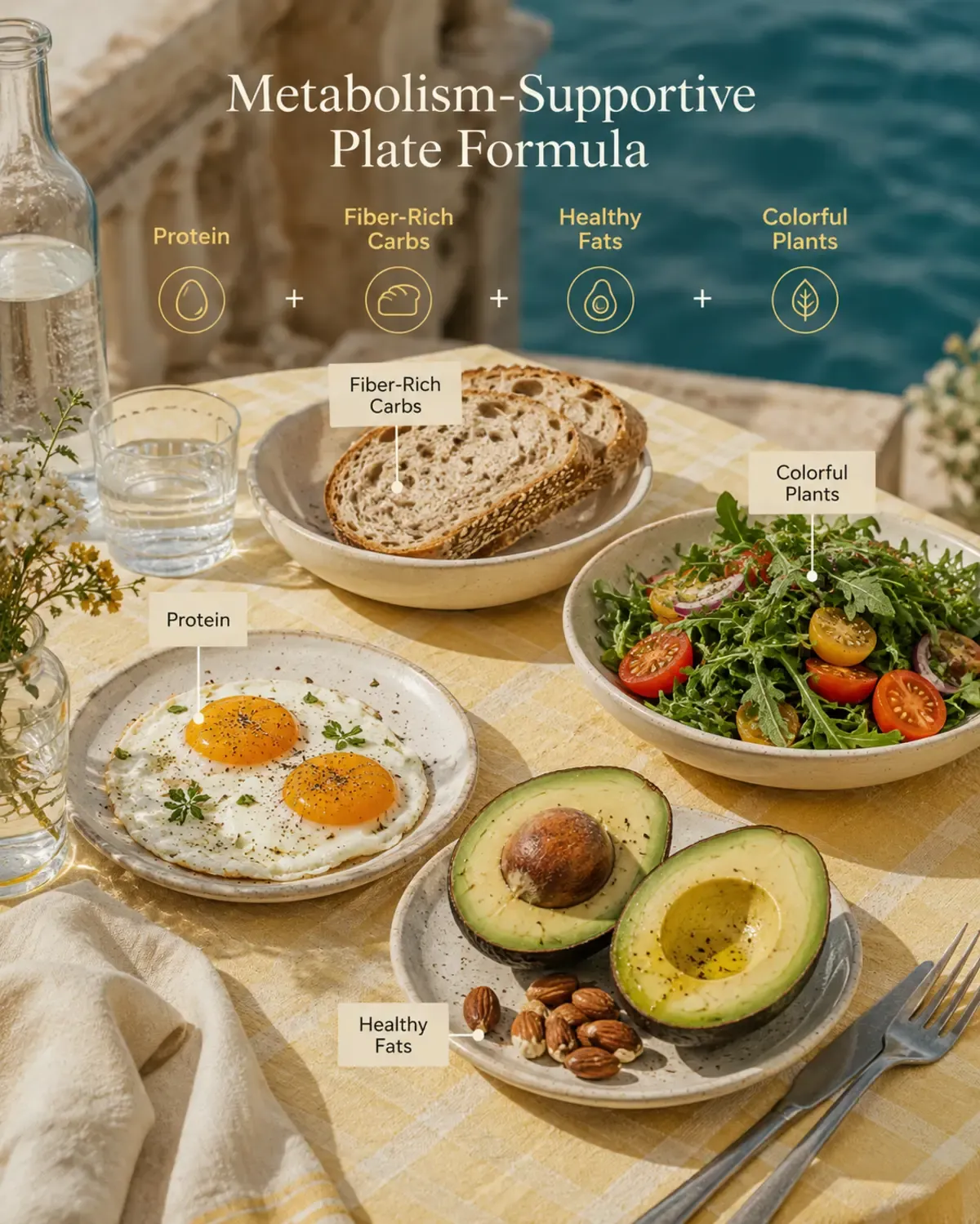
Use this formula:
Protein + fiber-rich carbohydrate + healthy fat + colorful plants
Examples:
- Greek yogurt with berries, chia seeds, and walnuts
- eggs with sourdough, avocado, and tomatoes
- salmon with potatoes, greens, and olive oil
- tofu with rice, vegetables, and sesame
- lentils with roasted vegetables, herbs, and tahini
For more guidance, read Blood Sugar Balance for Women: What It Means and Why It Matters and How to Build a Blood-Sugar-Friendly Breakfast.
4. Strength Train Instead of Only Cutting Food
If you want to support metabolism, muscle matters.
Strength training helps your body preserve and build lean tissue, which supports metabolic health, glucose use, posture, bone health, and long-term strength.
You do not need to train every day.
A sustainable routine might include:
- 2–4 strength sessions per week
- progressive resistance
- enough rest between sessions
- full-body movements
- proper protein intake
- walking on non-training days
Think of strength training as a conversation with your body.
You are telling it:
“Keep me strong. Keep me capable. Keep me supported.”
5. Eat Enough Around Your Workouts
If you train hard but under-eat, your body may struggle to adapt.
You may benefit from eating a balanced meal a few hours before training and a protein-containing meal or snack afterward.
This does not need to be complicated.
Pre-workout options:
- Greek yogurt and fruit
- eggs and toast
- banana with yogurt
- oatmeal with protein
- rice bowl leftovers
- cottage cheese with fruit
Post-workout options:
- chicken or tofu bowl
- omelet with potatoes
- Greek yogurt with berries
- lentil soup with bread
- salmon with rice and vegetables
- protein-rich smoothie, if you enjoy smoothies
The goal is not to “earn” food through exercise.
The goal is to fuel the body you are asking to perform.

6. Prioritize Sleep and Recovery
If you are not sleeping, your metabolism may feel harder to support.
Poor sleep can increase cravings, reduce training motivation, worsen mood, and make hunger feel more intense.
Before cutting more food, look at your recovery.
Ask:
- Am I sleeping enough?
- Am I waking rested?
- Am I training harder than I can recover from?
- Am I using caffeine to push through exhaustion?
- Am I eating enough during the day?
- Do I have any true rest in my week?
Sometimes the most effective metabolism support is not another diet change.
It is recovery.
7. Choose Consistency Over Extremes
Your body does not need a perfect plan for two weeks.
It needs a sustainable rhythm for months and years.
This may look like:
- protein at most meals
- walking most days
- strength training several times per week
- balanced breakfasts
- enough carbohydrates to support energy
- regular sleep
- fewer skipped meals
- less all-or-nothing thinking
Consistency is not glamorous, but it is powerful.
And it is much kinder to your metabolism than repeated cycles of restriction and rebound.
How to Build a Metabolism-Supportive Plate
Here is the simplest structure:
Step 1: Choose Protein
Examples: eggs, fish, chicken, tofu, Greek yogurt, cottage cheese, lentils, beans, tempeh
Step 2: Add Fiber-Rich Carbohydrates
Examples: oats, potatoes, sweet potatoes, fruit, beans, lentils, quinoa, brown rice, whole grain bread, vegetables
Step 3: Add Healthy Fats
Examples: olive oil, avocado, nuts, seeds, tahini, olives, fatty fish
Step 4: Add Color
Examples: leafy greens, tomatoes, peppers, berries, herbs, broccoli, carrots, mushrooms, citrus
This kind of meal supports energy, satisfaction, and blood sugar balance without making food feel restrictive.
For more food ideas, read The Best Foods to Support a Healthy Metabolism.
What If You Do Want Fat Loss?
This article is not saying fat loss is wrong.
Many women have body composition goals, and those goals can be valid.
The difference is in the method.
A metabolism-supportive fat loss phase should usually be:
- moderate, not extreme
- protein-focused
- strength-training supported
- time-limited
- paired with enough sleep and recovery
- flexible enough to maintain
- respectful of hunger, cycle changes, and energy
- free from punishment and panic
Instead of asking, “How little can I eat?”
Ask:
What is the smallest effective deficit I can use while still feeling strong, nourished, and functional?
That question changes everything.
It moves you away from punishment and toward strategy.
A good fat loss plan should not make your life smaller, colder, more anxious, or more obsessive.
It should support your health while moving you toward your goal.
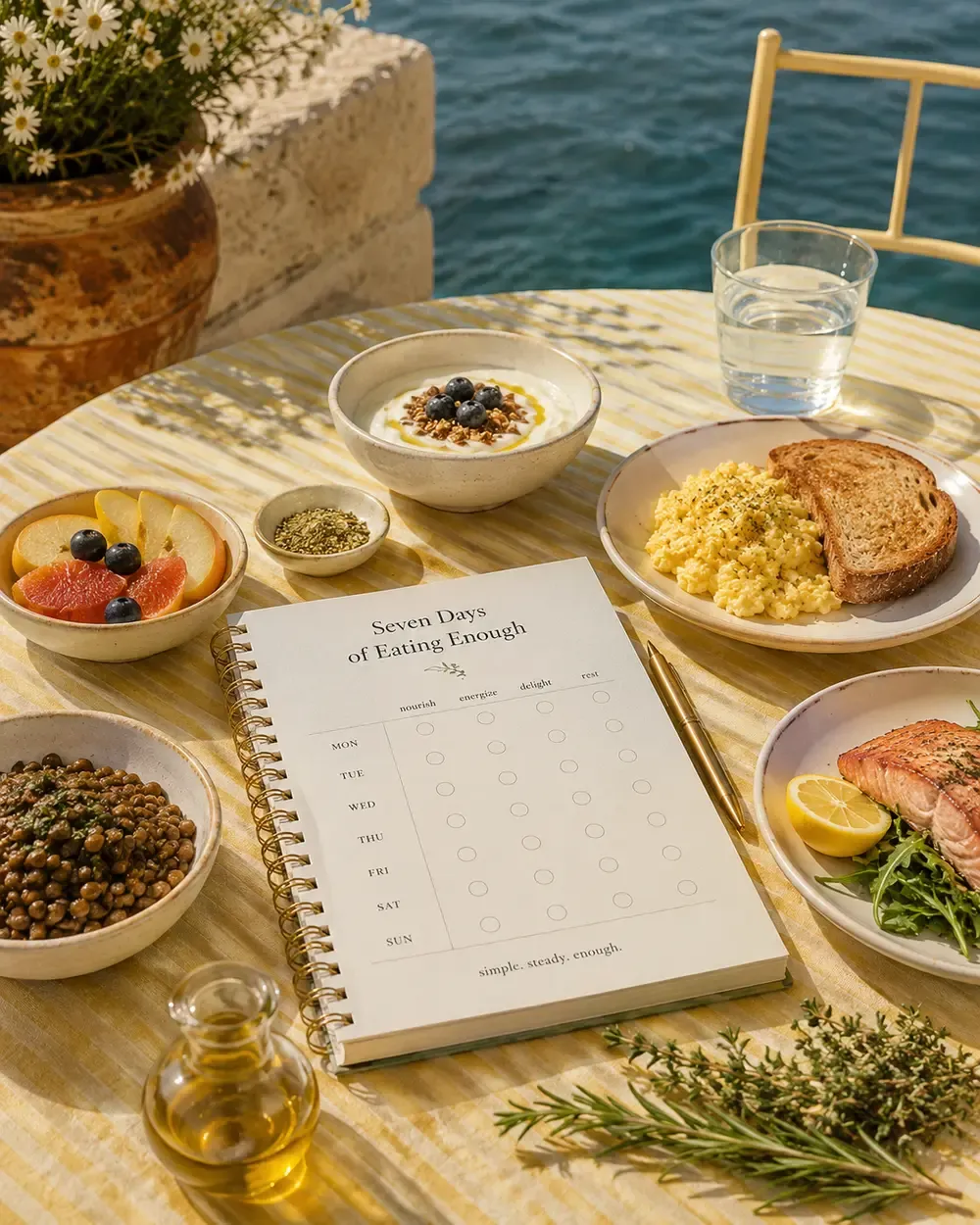
A Gentle Reset: 7 Days of Eating Enough
If you suspect you have been under-eating, try this for seven days.
Not as a challenge.
Not as a perfect plan.
Just as information.
For 7 Days
- Eat breakfast with protein.
- Do not rely on coffee as a meal.
- Include protein at lunch and dinner.
- Add a fiber-rich carbohydrate to meals.
- Include healthy fats in reasonable amounts.
- Take one short walk daily.
- Strength train if it is already part of your routine, but do not add extra punishment workouts.
- Notice your energy, cravings, sleep, mood, digestion, and training performance.
You may be surprised by how much better your body feels when it is not constantly negotiating with hunger.
This is not about overeating.
It is about rebuilding trust with your body.
Related Reading
- Metabolic Health for Women Over 35: A Simple Guide — shows what to support instead of only focusing on eating less.
- Why Your Metabolism Changes in Your 30s and 40s — explains why your body may need a different approach now.
- Body Recomposition for Women: Nutrition Basics — connects eating enough with muscle, fat loss, and body composition goals.
Final Thoughts
Eating less is not always better for your metabolism.
Sometimes it is simply less.
Less energy.
Less recovery.
Less strength.
Less patience.
Less hormonal support.
Less joy around food.
Less capacity to live your life well.
Your body needs nourishment to function.
Especially after 35, your metabolism is better supported by strength, protein, steady meals, blood sugar balance, sleep, walking, recovery, and consistency than by constant restriction.
You do not need to eat perfectly.
You do not need to count every bite.
You do not need to punish your body into cooperation.
You need to feed it well enough to feel steady, strong, and supported.
That is not giving up.
That is metabolic wisdom.
Gentle note: This article is for educational purposes only and does not replace medical advice. If you are experiencing persistent fatigue, dizziness, irregular or missing periods, rapid weight changes, blood sugar concerns, digestive changes, or symptoms that affect daily life, speak with a qualified healthcare professional. If you have a history of disordered eating, restrictive dieting, or food anxiety, consider working with a registered dietitian or appropriate healthcare provider for personalized support.





















Community Notes
Join the conversation
Share a thoughtful note, question, or lived observation.