
When women think about metabolism, food is often the first place the mind goes.
What should I eat?
What should I avoid?
Is there a food that helps “speed things up”?
Should I be eating less? More protein? Fewer carbs? No snacks?
It can become noisy very quickly.
And honestly, much of the online conversation around metabolism makes women feel more confused, not more supported.
The truth is simpler and far less dramatic: the best foods for a healthy metabolism are not magic foods. They are the foods that help your body maintain muscle, regulate blood sugar, feel satisfied, recover well, and produce steady energy.
Especially after 35, metabolism is not just about burning calories. It is about how your body uses energy, preserves lean tissue, responds to insulin, handles stress, and recovers from daily life.
Food can support all of that.
Not through restriction.
Not through fear.
Not through another short-term reset.
But through consistent, nourishing meals that help your body feel steady.
If you are new to this topic, you may want to begin with Metabolic Health for Women Over 35: A Simple Guide and Why Your Metabolism Changes in Your 30s and 40s. This article builds on those foundations and focuses specifically on what to eat.

First: No Single Food “Boosts” Your Metabolism Overnight
Before we talk about the best foods, let us gently clear something up.
There is no single food that will dramatically “boost” your metabolism in a lasting, meaningful way.
Green tea, chili, lemon water, celery juice, apple cider vinegar, or any other trendy food may be marketed as metabolism-enhancing, but the bigger picture matters much more.
Your metabolism is influenced by many factors, including muscle mass, physical activity, sleep, stress, age, hormones, genetics, and overall nutrition. Cleveland Clinic describes metabolism as the process your body uses to convert food and drink into energy, and notes that balanced meals, regular eating, lean proteins, whole grains, fruits, vegetables, and healthy fats all support the body’s energy needs.
So instead of asking, “What food speeds up metabolism?” a better question is:
What foods help my body feel nourished, strong, stable, and metabolically supported?
That is where the real work begins.

What Makes a Food Good for Metabolic Health?
A metabolism-supporting food usually does at least one of these things:
-
provides protein to support muscle and satiety
-
contains fiber to support blood sugar, digestion, and fullness
-
offers micronutrients that help the body function well
-
supports steady energy rather than quick spikes and crashes
-
helps you build satisfying meals you can repeat consistently
-
supports heart, gut, hormonal, or inflammatory health
This is why the best foods for metabolism are usually simple, whole, familiar foods.
Not rare powders.
Not expensive supplements.
Not foods you force yourself to eat because someone online said they are “clean.”
Think eggs, fish, lentils, Greek yogurt, oats, berries, beans, olive oil, vegetables, potatoes, tofu, nuts, seeds, whole grains, herbs, and water.
Beautifully ordinary foods.
Used consistently.
1. Protein-Rich Foods
Protein is one of the most important nutrients for metabolic health.
It supports muscle maintenance, helps with fullness, contributes to recovery, and becomes especially important as we age. Harvard Health notes that after 40, women naturally start losing muscle and need more protein to help preserve it.
Muscle matters because it is metabolically active tissue. It helps your body use glucose, supports strength, and contributes to long-term resilience. Protein, especially when paired with resistance training, plays an important role in maintaining muscle function with age.
Good protein-rich foods include:
-
eggs
-
Greek yogurt
-
cottage cheese
-
fish
-
chicken
-
turkey
-
lean meat
-
tofu
-
tempeh
-
edamame
-
lentils
-
beans
-
chickpeas
-
seafood
-
protein-rich grains like quinoa
-
nuts and seeds, especially as part of a meal
For women over 35, one of the most helpful shifts is spreading protein across the day rather than saving most of it for dinner.
A protein-rich breakfast can be especially supportive if you often experience cravings, low energy, or afternoon crashes. You can read High-Protein Breakfast Ideas for Steady Energy and How Much Protein Do Women Over 35 Really Need? for more detail.
Simple ways to add more protein
Try:
-
adding Greek yogurt to breakfast
-
including eggs or tofu in the morning
-
adding chicken, fish, lentils, or beans to lunch
-
choosing cottage cheese or edamame as a snack
-
adding smoked salmon, tuna, or tempeh to a salad
-
building meals around protein first, then adding carbohydrates, fats, and vegetables
A gentle formula:
Protein at breakfast. Protein at lunch. Protein at dinner.
Not perfect. Just consistent.

2. High-Fiber Carbohydrates
Carbohydrates are often unfairly blamed for metabolic issues.
But the problem is rarely “carbs” as a whole. The type, amount, timing, and pairing of carbohydrates matter.
Fiber-rich carbohydrates can be deeply supportive for metabolic health. They help with fullness, digestion, blood sugar steadiness, and heart health. Mayo Clinic notes that high-fiber foods can support healthy cholesterol levels and may also benefit blood pressure and inflammation.
Good high-fiber carbohydrates include:
-
oats
-
beans
-
lentils
-
chickpeas
-
berries
-
apples
-
pears
-
vegetables
-
potatoes with skin
-
sweet potatoes
-
quinoa
-
barley
-
whole grains
-
chia seeds
-
flaxseed
These foods are not just “carbs.” They bring fiber, minerals, antioxidants, and texture to meals.
For example, oats with Greek yogurt and berries will affect your body differently than a sweet pastry eaten alone. Rice with salmon, vegetables, and olive oil will feel different from a bowl of plain refined carbohydrates without protein or fiber.
The goal is not to remove carbohydrates.
The goal is to build meals that your body can use well.
For more on this, read Blood Sugar Balance for Women: What It Means and Why It Matters and How to Build a Blood-Sugar-Friendly Breakfast.

3. Beans and Lentils
Beans and lentils deserve their own section because they are one of the most elegant metabolism-supporting foods: affordable, versatile, filling, and rich in both plant protein and fiber.
They support blood sugar balance because they digest more slowly than many refined carbohydrates. They also support heart health. The American Heart Association notes that beans can be part of a heart-healthy diet and may help improve blood cholesterol.
Good options include:
-
lentils
-
chickpeas
-
black beans
-
kidney beans
-
cannellini beans
-
white beans
-
edamame
-
split peas
Ways to use them:
-
lentil soup with herbs and olive oil
-
chickpea salad with cucumber, parsley, lemon, and tahini
-
white bean dip with vegetables
-
black beans in a rice bowl
-
lentils added to a salad
-
edamame as a snack
-
roasted chickpeas for crunch
If beans make you feel bloated, start slowly. Use smaller portions, rinse canned beans well, and pair them with herbs and spices like cumin, fennel, ginger, or mint.
Your gut may need time to adjust.

4. Colorful Vegetables
Vegetables support metabolic health in several quiet but powerful ways.
They provide fiber, water, minerals, antioxidants, and volume. They help meals feel more satisfying without needing to rely on restriction. They also support gut health and overall nutrient intake.
Aim for variety rather than perfection.
Good options include:
-
leafy greens
-
broccoli
-
cauliflower
-
peppers
-
tomatoes
-
carrots
-
mushrooms
-
zucchini
-
eggplant
-
cabbage
-
asparagus
-
cucumber
-
onions
-
herbs
-
sea vegetables if you enjoy them
A practical goal is to include vegetables in at least two meals per day.
Not because you are “being good,” but because your body runs better when it receives micronutrients regularly.
Easy ways to eat more vegetables
Try:
-
adding spinach to eggs
-
roasting a tray of vegetables twice per week
-
adding cucumber and herbs to lunch
-
keeping pre-washed greens available
-
adding frozen vegetables to soups or stir-fries
-
using vegetables as part of breakfast, not only dinner
-
making a simple side salad with olive oil and lemon
The best vegetable is the one you will actually eat.

5. Berries and Whole Fruits
Fruit is sometimes treated with suspicion because it contains sugar.
But whole fruit is very different from refined sugar. Whole fruits come with fiber, water, vitamins, minerals, and polyphenols. Berries in particular are a beautiful option for women who want something naturally sweet that still supports a balanced plate.
Good fruit choices include:
-
berries
-
apples
-
pears
-
oranges
-
kiwi
-
grapefruit
-
peaches
-
plums
-
pomegranate
-
cherries
-
bananas, especially around workouts or paired with protein
Fruit becomes even more blood-sugar-friendly when paired with protein or fat.
For example:
-
berries with Greek yogurt
-
apple slices with almond butter
-
pear with cottage cheese
-
banana with peanut butter or tahini
-
orange with boiled eggs
-
berries with chia pudding
You do not need to fear fruit.
You just may feel better when you pair it well.

6. Healthy Fats
Healthy fats support satisfaction, hormone production, nutrient absorption, and meal enjoyment.
They also make food feel beautiful and complete.
Good sources include:
-
extra virgin olive oil
-
avocado
-
nuts
-
seeds
-
tahini
-
fatty fish
-
olives
-
chia seeds
-
flaxseed
-
walnuts
For women over 35, healthy fats can be especially helpful because meals that are too low in fat often feel unsatisfying. This can lead to grazing, cravings, or feeling like you are eating “healthy” but never quite full.
The key is portion and quality.
You do not need to add large amounts of fat to every meal, but including some healthy fat can make meals more satisfying and supportive.
Examples:
-
olive oil over roasted vegetables
-
avocado with eggs
-
tahini over lentils
-
walnuts in Greek yogurt
-
chia seeds in oats
-
salmon with potatoes and greens
-
olives in a Mediterranean-style bowl
This is also where the Mediterranean style of eating becomes useful: simple whole foods, olive oil, herbs, fish, legumes, grains, vegetables, and meals that feel pleasurable rather than punishing.

7. Fermented and Gut-Supportive Foods
Your gut plays an important role in digestion, nutrient absorption, immune function, and overall wellbeing.
Fermented foods may support gut microbial diversity, though tolerance varies from person to person.
Options include:
-
yogurt with live cultures
-
kefir
-
sauerkraut
-
kimchi
-
miso
-
tempeh
-
fermented pickles
-
some cheeses
You do not need to force fermented foods if they do not suit your digestion. But if you enjoy them, they can be a useful addition.
Gut-supportive foods also include fiber-rich plant foods such as:
-
oats
-
beans
-
lentils
-
onions
-
garlic
-
asparagus
-
berries
-
apples
-
flaxseed
-
chia seeds
A healthy metabolism is not separate from digestion. If your meals leave you bloated, uncomfortable, or irregular, it may be worth adjusting fiber gradually and paying attention to tolerance.
Food should support you, not become another source of stress.

8. Whole Grains
Whole grains can be part of a metabolism-supporting diet, especially when paired with protein, healthy fats, and vegetables.
The American Heart Association notes that whole grains can support healthy digestion and may reduce the risk of diabetes, heart disease, and stroke.
Good options include:
-
oats
-
barley
-
quinoa
-
brown rice
-
farro
-
buckwheat
-
rye
-
whole grain sourdough
-
whole wheat pasta
-
bulgur
Whole grains are often more satisfying than refined grains because they contain more fiber and nutrients.
That said, you do not have to make every carbohydrate “perfect.” White rice, sourdough, or pasta can still fit into a healthy diet when the overall meal is balanced.
For example:
-
pasta with tuna, tomatoes, olive oil, and arugula
-
rice with tofu, vegetables, and sesame
-
sourdough with eggs and avocado
-
potatoes with salmon and salad
Metabolic health is not built by banning normal foods.
It is built by learning how to compose meals well.

9. Hydrating Foods and Fluids
Hydration supports digestion, circulation, temperature regulation, cognitive function, and exercise performance.
Sometimes fatigue, headaches, cravings, or poor concentration are made worse by dehydration, especially if you rely heavily on coffee or eat very salty foods.
Good hydration options include:
-
water
-
sparkling water
-
herbal tea
-
mineral water
-
broth
-
water-rich fruits
-
cucumber
-
citrus
-
soups
-
yogurt
-
smoothies with balanced ingredients
You do not need to obsess over water intake, but you may feel better with a few hydration anchors:
-
a glass of water in the morning
-
water with meals
-
mineral water after exercise
-
herbal tea in the evening
-
extra fluids during hot weather
For women who train, walk often, sweat, or live in warm climates, hydration and electrolytes may become more noticeable.

10. Herbs, Spices, and Flavor Builders
Herbs and spices may not transform metabolism on their own, but they make healthy eating more enjoyable and that matters.
A meal you enjoy is a meal you can repeat.
Useful flavor builders include:
-
parsley
-
cilantro
-
basil
-
mint
-
thyme
-
rosemary
-
dill
-
cinnamon
-
turmeric
-
ginger
-
cumin
-
paprika
-
chili
-
black pepper
-
garlic
-
lemon
-
vinegar
-
mustard
-
capers
These ingredients can help you create meals that feel abundant, not restrictive.
A lentil bowl becomes more satisfying with tahini, lemon, herbs, and olive oil. Eggs feel more elevated with tomatoes, parsley, and chili flakes. Greek yogurt becomes more beautiful with berries, cinnamon, and walnuts.
Metabolism-supportive eating should not feel like dry chicken and steamed broccoli forever.
Your body deserves nourishment.
Your appetite deserves pleasure.
Your meals deserve flavor.

How to Build a Metabolism-Supporting Plate
The easiest way to eat for metabolic health is to stop thinking in isolated foods and start thinking in plates.
A simple formula:
Protein + fiber-rich carbohydrate + healthy fat + colorful plants
This helps support blood sugar, fullness, energy, and nutrient intake.
Example plates
Breakfast:
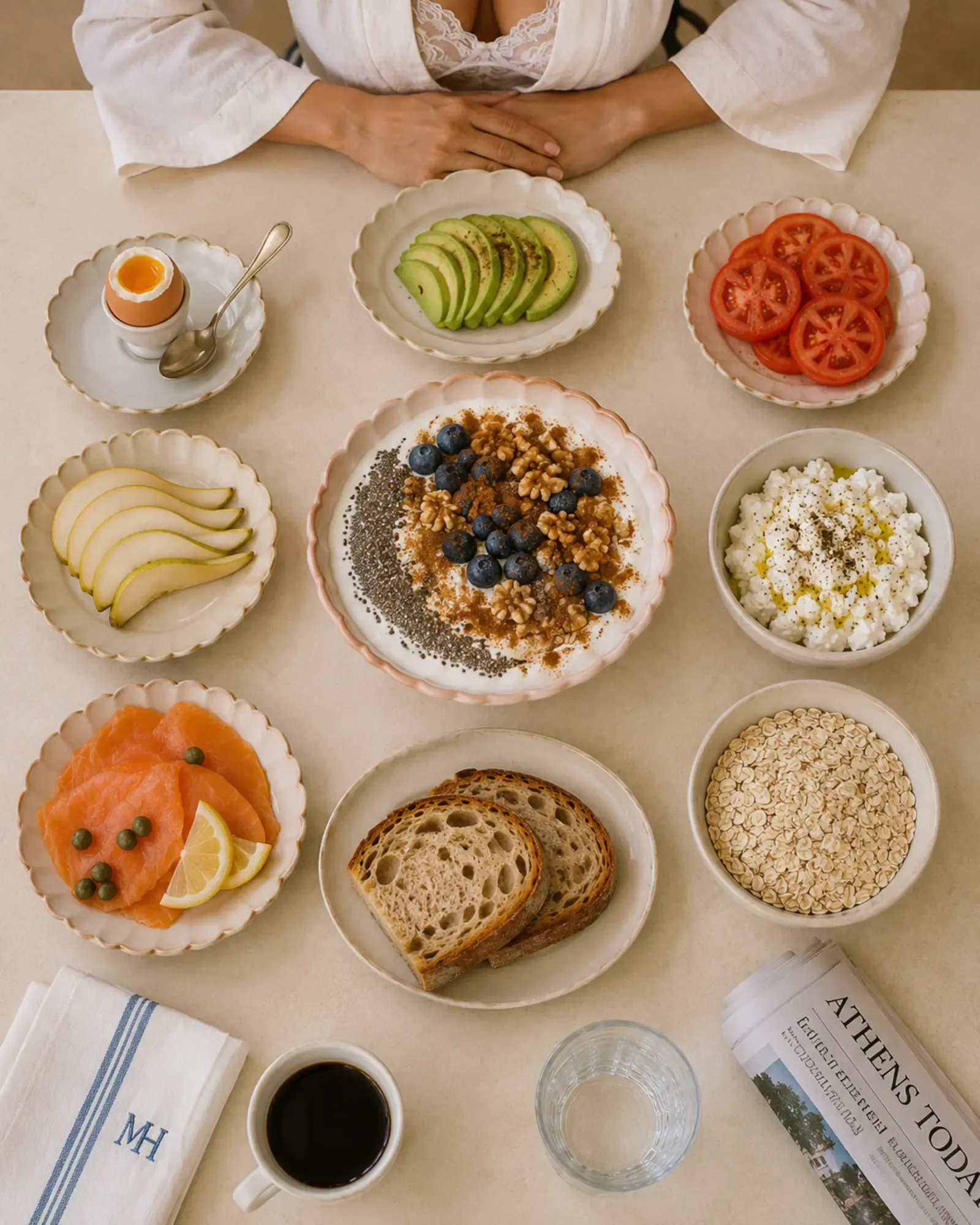
Greek yogurt, berries, chia seeds, walnuts, cinnamon
Lunch:
Chicken or tofu bowl with quinoa, roasted vegetables, greens, olive oil, and lemon
Dinner:
Salmon with potatoes, broccoli, herbs, and avocado or olive oil dressing
Snack:
Cottage cheese with fruit, or hummus with vegetables, or boiled eggs with tomatoes
This is not about perfection. It is about building meals that hold you.
If you often feel tired after meals, this structure can be especially useful. Read Why You Feel Tired After Eating and What May Help for more guidance.

Best Breakfast Foods for Metabolism
Breakfast can set the tone for blood sugar, cravings, and energy.
A metabolism-supporting breakfast usually includes protein, fiber, and some healthy fat.
Best breakfast foods include:
-
eggs
-
Greek yogurt
-
cottage cheese
-
tofu
-
smoked salmon
-
oats
-
chia seeds
-
berries
-
avocado
-
sourdough or rye bread
-
vegetables
-
nuts and seeds
Breakfast ideas
-
Greek yogurt with berries, chia seeds, and walnuts
-
eggs with avocado, tomatoes, and sourdough
-
tofu scramble with spinach and potatoes
-
cottage cheese with pear, cinnamon, and almonds
-
smoked salmon with rye bread, cucumber, and herbs
-
overnight oats with Greek yogurt and flaxseed
For more ideas, read High-Protein Breakfast Ideas for Steady Energy.
Best Lunch and Dinner Foods for Metabolism
Lunch and dinner are where many women can build more satisfying meals.
Good options include:
-
fish
-
chicken
-
turkey
-
tofu
-
tempeh
-
lentils
-
beans
-
chickpeas
-
eggs
-
potatoes
-
quinoa
-
rice
-
whole grains
-
leafy greens
-
roasted vegetables
-
olive oil
-
tahini
-
avocado
-
herbs and spices
Lunch and dinner ideas
-
salmon with potatoes, greens, and olive oil
-
chicken quinoa bowl with roasted vegetables
-
lentil soup with herbs and Greek yogurt on the side
-
tofu stir-fry with rice and vegetables
-
chickpea salad with cucumber, tomatoes, parsley, and tahini
-
turkey or bean chili with avocado
-
egg and vegetable frittata with side salad
-
sardines or tuna with sourdough, tomatoes, and greens
The goal is to leave the meal feeling satisfied, not stuffed or deprived.
Best Snacks for Metabolism
Snacks can be helpful when they are structured.
A snack that is mostly sugar or refined carbohydrates may give quick energy but leave you hungry soon after. A snack with protein, fiber, or healthy fat tends to last longer.
Good metabolism-supporting snacks include:
-
Greek yogurt with berries
-
cottage cheese with fruit
-
boiled eggs with tomatoes
-
hummus with vegetables
-
apple with nut butter
-
edamame
-
chia pudding
-
tuna on whole grain crackers
-
roasted chickpeas
-
nuts with fruit
-
turkey or tofu roll-ups
-
kefir with cinnamon
For more ideas, read High-Protein Snacks That Actually Keep You Full.
A good snack should help you arrive at your next meal feeling steady, not more chaotic.
Foods to Limit Without Fear or Extremes
Supporting metabolism does not require cutting out every food you enjoy.
But some foods are easier to overconsume and less supportive for energy, blood sugar, fullness, and long-term health when they become the foundation of the diet.
You may feel better limiting:
-
sugary drinks
-
alcohol, especially if it affects sleep
-
ultra-processed snack foods
-
refined carbohydrates eaten alone
-
very low-protein meals
-
frequent pastries or sweets as breakfast
-
meals that are mostly caffeine and convenience
-
“diet” foods that leave you unsatisfied
Notice the tone here: limit, not fear.
A pastry with coffee is not a moral failure.
A glass of wine is not a ruined metabolism.
A low-protein breakfast once in a while is not a disaster.
The question is not, “Can I ever eat this?”
The better question is:
What does my usual pattern support?
Your pattern matters more than any single meal.
A Simple 1-Day Metabolism-Supporting Meal Example
Here is what a metabolism-supporting day could look like.
Breakfast
Greek yogurt with berries, chia seeds, walnuts, and cinnamon
Coffee after food, if possible
Lunch
Chicken or tofu bowl with quinoa, roasted vegetables, greens, olive oil, lemon, and herbs
Snack
Apple with almond butter
or cottage cheese with fruit
or hummus with cucumber and carrots
Dinner
Salmon or lentils with potatoes, broccoli, olive oil, and a simple side salad
Evening
Herbal tea
A short walk after dinner if it feels good
A calmer wind-down routine before bed
This is not a rulebook. It is a template.
You can adapt it to your preferences, culture, appetite, schedule, and budget.

Related Reading
- Metabolic Health for Women Over 35: A Simple Guide — explains the bigger metabolic system these foods support.
- Fiber for Women’s Health: Gut, Hormones, and Blood Sugar — goes deeper on one of the strongest food foundations for metabolism.
- Healthy Fats for Hormones, Skin, and Energy — helps you use fat to build satisfying metabolism-supportive meals.
Final Thoughts
The best foods to support a healthy metabolism are not extreme, exotic, or difficult to find.
They are foods that help your body feel steady.
Protein to support muscle.
Fiber to support blood sugar and digestion.
Healthy fats to support satisfaction.
Colorful plants to provide nutrients.
Whole-food carbohydrates to provide energy.
Hydration to support daily function.
Flavor to make the whole thing sustainable.
For women over 35, this matters deeply.
Your metabolism is influenced by more than food, but food is one of the most loving and practical places to begin.
Not with restriction.
Not with fear.
Not with another plan that makes your life smaller.
But with meals that help you feel nourished, strong, calm, and capable in your body.
That is the real goal.
Gentle note: This article is for educational purposes only and does not replace medical advice. If you have diabetes, insulin resistance, thyroid disease, digestive conditions, a history of disordered eating, or symptoms such as persistent fatigue, dizziness, rapid weight changes, or blood sugar concerns, please speak with a qualified healthcare professional for personalized guidance.




















Community Notes
Join the conversation
Share a thoughtful note, question, or lived observation.