
Body recomposition sounds technical, but the idea is actually quite simple.
It means changing the composition of your body — usually by building or preserving muscle while reducing body fat.
Not just becoming smaller.
Not chasing the lowest number on the scale.
Not dieting your way into exhaustion.
Body recomposition is about creating a stronger, more metabolically supported body.
For many women, especially after 35, this is a much more useful goal than weight loss alone. Because the scale does not tell you how much muscle you have. It does not tell you how strong you feel. It does not tell you whether your blood sugar is steadier, whether your cravings have calmed, or whether your body is better supported.
A woman can weigh the same and look different.
She can lose inches without dramatic scale changes.
She can feel stronger, more energized, and more confident before the number on the scale catches up.
This is why body recomposition deserves a calmer, smarter conversation.
And nutrition is one of the most important pieces.
If you are new to the metabolism cluster, begin with Metabolic Health for Women Over 35: A Simple Guide and Why Your Metabolism Changes in Your 30s and 40s. This article builds on those foundations and focuses specifically on how to eat for body recomposition.

What Is Body Recomposition?
Body recomposition means improving the ratio of muscle to fat in your body.
In simple terms, it often involves:
-
building muscle
-
preserving muscle during fat loss
-
reducing body fat gradually
-
improving strength
-
supporting metabolic health
-
changing how your body looks and feels, even if weight changes slowly
This is different from traditional weight loss.
Traditional weight loss often focuses mainly on the scale. Body recomposition focuses on what the body is made of.
That distinction matters.
If you lose weight very quickly by eating too little, you may lose both fat and muscle. The scale may go down, but your body may not become stronger, healthier, or more metabolically resilient.
Body recomposition asks a better question:
How can I lose fat while keeping or building the muscle that supports my metabolism, shape, strength, and long-term health?
That is a very different approach.
Can Women Build Muscle and Lose Fat at the Same Time?
Yes, many women can build muscle and lose fat at the same time, especially if they are new to strength training, returning after a break, improving protein intake, or moving from inconsistent habits to a more structured routine.
However, body recomposition is usually slower than aggressive weight loss.
It requires patience because muscle gain and fat loss do not always show clearly on the scale. You might be losing fat while gaining lean tissue, which can make scale weight change slowly or fluctuate.
This can feel frustrating if you are used to judging progress only by weight.
But recomposition progress may show up as:
-
stronger lifts
-
better posture
-
firmer shape
-
improved waist measurement
-
clothes fitting differently
-
more stable energy
-
fewer cravings
-
better recovery
-
improved confidence in your body
-
photos showing visible changes over time
A body that is recomposing may not always look impressive on paper week to week.
But over months, the difference can be meaningful.
Why Body Recomposition Matters More After 35
After 35, body composition becomes increasingly important.
This is not because you need to fight aging. It is because muscle becomes one of your most valuable health assets.
Muscle supports:
-
metabolism
-
insulin sensitivity
-
blood sugar regulation
-
strength
-
posture
-
bone health
-
healthy aging
-
daily function
-
injury prevention
-
body shape
Adults are generally advised to include muscle-strengthening activity at least two days per week, alongside regular aerobic activity, for overall health. The CDC’s adult physical activity guidance recommends 150 minutes of moderate-intensity activity weekly and at least two days of muscle-strengthening activity each week. (CDC)
For women, this matters because the body can gradually lose muscle with age if strength training and protein are not prioritized. Hormonal shifts, stress, sleep changes, and dieting history can also influence how easy it feels to maintain muscle and manage body fat.
This is why the old advice to simply “eat less” can be so incomplete.
For more on that, read Why Eating Less Is Not Always Better for Your Metabolism.
Body recomposition is not about restriction. It is about building a body that is better supported.

The Nutrition Foundations of Body Recomposition
Nutrition for body recomposition has a few main goals:
-
provide enough protein to support muscle
-
provide enough energy to train and recover
-
create a moderate calorie deficit if fat loss is desired
-
support blood sugar stability
-
include carbohydrates for performance and energy
-
include healthy fats for hormones, satisfaction, and nutrient absorption
-
make the plan sustainable enough to repeat
It is not about eating perfectly.
It is about giving your body the materials it needs to adapt.
Strength training gives the signal.
Protein provides the building blocks.
Carbohydrates provide fuel.
Fats support satisfaction and hormones.
Sleep and recovery help the body actually change.
When one of these is missing, body recomposition becomes harder.
1. Eat Enough Protein
Protein is the cornerstone of body recomposition nutrition.
It helps support muscle repair, fullness, recovery, and lean mass preservation. For exercising individuals, the International Society of Sports Nutrition states that a daily protein intake of around 1.4–2.0 grams per kilogram of body weight is sufficient for most people to build and maintain muscle through a positive muscle protein balance. (Scholar Commons)
That range may not be appropriate for everyone, but it gives useful context: active women who strength train often need more protein than the basic minimum recommended to avoid deficiency.
A simpler approach is to include a solid protein source at each meal.
Good protein sources include:
-
eggs
-
Greek yogurt
-
cottage cheese
-
fish
-
chicken
-
turkey
-
lean meat
-
tofu
-
tempeh
-
edamame
-
lentils
-
beans
-
chickpeas
-
seafood
-
protein-rich grains like quinoa
For many women, breakfast is the easiest place to improve.
A coffee and a small piece of toast may not support recomposition very well. A breakfast with eggs, Greek yogurt, cottage cheese, tofu, or another protein source can help stabilize appetite and support muscle.
For more detail, read How Much Protein Do Women Over 35 Really Need?, Why Protein Matters More as You Age, and High-Protein Breakfast Ideas for Steady Energy.
A simple protein rhythm
Aim for protein at:
-
breakfast
-
lunch
-
dinner
-
snacks, if needed
This does not need to be obsessive. It simply helps your body receive protein throughout the day instead of trying to catch up at dinner.
2. Do Not Cut Calories Too Aggressively
A moderate calorie deficit can support fat loss.
But aggressive dieting often works against body recomposition.
If you eat too little, you may struggle to train well, recover properly, preserve muscle, sleep deeply, or regulate cravings. You may lose weight faster at first, but some of that weight may come from lean tissue, especially if protein and strength training are not in place.
This is why body recomposition usually works best with either:
-
maintenance calories while building strength and improving food quality
-
a small to moderate calorie deficit
-
periods of eating at maintenance between fat-loss phases
-
enough protein and resistance training throughout
The goal is not to eat as little as possible.
The goal is to eat enough to train, recover, and preserve muscle while supporting gradual fat loss if that is part of your goal.
If you feel constantly tired, cold, hungry, irritable, weak in workouts, or obsessed with food, your deficit may be too aggressive.
Body recomposition asks for patience.
Fast weight loss is not always better.
Smarter progress is better.

3. Build Balanced Meals Around Blood Sugar Stability
Blood sugar balance matters because it affects energy, cravings, mood, hunger, and training consistency.
A meal that is mostly refined carbohydrates and very little protein may leave you hungry again quickly. A meal that includes protein, fiber, healthy fats, and colorful plants tends to support steadier energy.
A balanced plate for recomposition might include:
-
protein
-
fiber-rich carbohydrates
-
healthy fats
-
vegetables or fruit
This helps you feel more satisfied and less pulled into the restrict-crave-overeat cycle.
If afternoon crashes, cravings, or post-meal fatigue are common for you, read Blood Sugar Balance for Women: What It Means and Why It Matters, Why You Feel Tired After Eating — and What May Help, and Cravings, Blood Sugar, and Stress: The Connection Explained.
A body recomposition plan should not make you feel chaotic around food.
It should make you feel steadier.
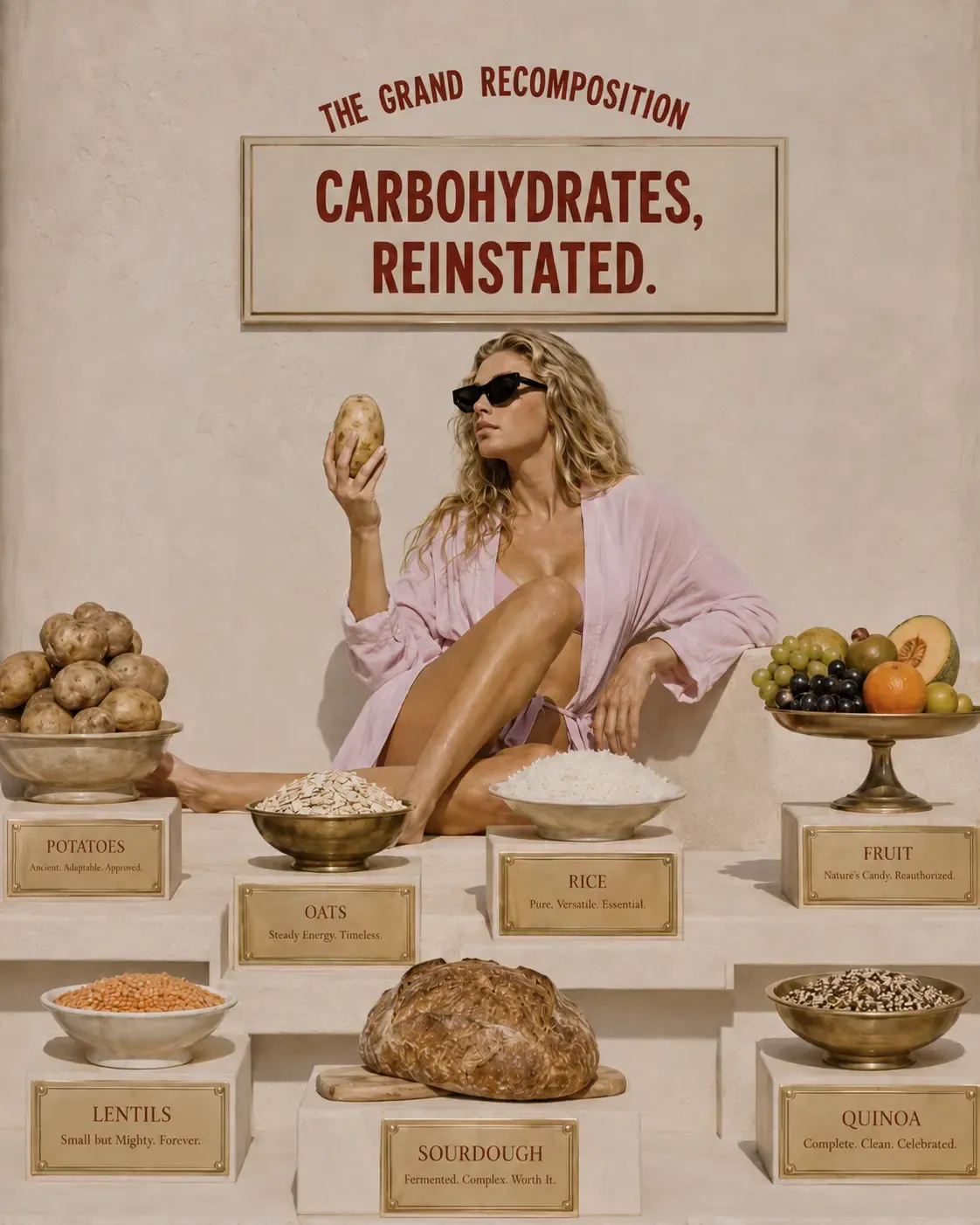
4. Use Carbohydrates Strategically
Carbohydrates are not the enemy of body recomposition.
In fact, if you strength train, carbohydrates can be very helpful. They support training performance, recovery, and overall energy.
The key is choosing carbohydrates that work well for your body and pairing them wisely.
Helpful carbohydrate sources include:
-
oats
-
potatoes
-
sweet potatoes
-
rice
-
quinoa
-
fruit
-
beans
-
lentils
-
whole grain bread
-
whole grain pasta
-
barley
-
vegetables
Carbohydrates can be especially useful:
-
before strength training
-
after workouts
-
at breakfast if you feel better with morning fuel
-
at dinner if they support sleep and satisfaction
-
alongside protein and vegetables
For example:
-
Greek yogurt with berries and oats
-
eggs with sourdough and tomatoes
-
chicken with rice and vegetables
-
salmon with potatoes and greens
-
tofu with noodles and vegetables
-
lentils with roasted vegetables and tahini
You do not need to earn carbohydrates.
You need to use them intelligently.
5. Include Healthy Fats
Healthy fats support satisfaction, hormones, nutrient absorption, and meal enjoyment.
Very low-fat diets can feel unsatisfying and may make meals less enjoyable, which often makes consistency harder.
Good fat sources include:
-
olive oil
-
avocado
-
nuts
-
seeds
-
tahini
-
olives
-
fatty fish
-
chia seeds
-
flaxseed
-
walnuts
For body recomposition, fat is useful, but portions matter because fats are energy-dense. You do not need to avoid them. You simply want to include them intentionally.
Examples:
-
olive oil on vegetables
-
avocado with eggs
-
tahini on lentil bowls
-
walnuts in Greek yogurt
-
salmon with salad
-
chia seeds in oats
Satisfaction matters. If your meals are too dry, too low-fat, or too joyless, the plan will likely not last.
6. Strength Training Is Non-Negotiable
Nutrition alone cannot create body recomposition.
You need a muscle-building signal.
That signal comes from resistance training.
Strength training tells your body that muscle is needed. Without it, a calorie deficit may lead to weight loss, but not necessarily the body composition change you want.
At minimum, adults are advised to do muscle-strengthening activities involving major muscle groups at least two days per week. (CDC) More structured hypertrophy-focused training may involve additional weekly volume, but the right amount depends on your level, recovery, schedule, and goals.
A good strength routine should include movements such as:
-
squats or leg presses
-
hip hinges or deadlifts
-
lunges or split squats
-
rows
-
presses
-
hip thrusts or glute bridges
-
carries
-
core stability work
You do not need to train until you are destroyed.
You need progressive, repeatable training that your body can recover from.
This is especially important for women who have spent years trying to change their body mostly through dieting and cardio. Body recomposition requires a different mindset.
You are not just trying to burn calories.
You are trying to build tissue.

7. Be Patient With the Scale
The scale can be misleading during body recomposition.
If you are losing fat while gaining muscle, the number may move slowly. It may even stay the same for a while.
This does not mean nothing is happening.
Progress may show up through:
-
measurements
-
progress photos
-
strength gains
-
better workout performance
-
improved posture
-
clothes fitting differently
-
waist changes
-
more muscle definition
-
steadier energy
-
better appetite regulation
This is why relying only on weight can make women abandon a plan that is actually working.
For recomposition, it is often helpful to track multiple markers:
-
strength in key lifts
-
waist and hip measurements
-
monthly progress photos
-
energy levels
-
hunger and cravings
-
sleep
-
how clothes fit
-
menstrual cycle changes
-
consistency with meals and training
The scale is one data point.
Not the whole story.
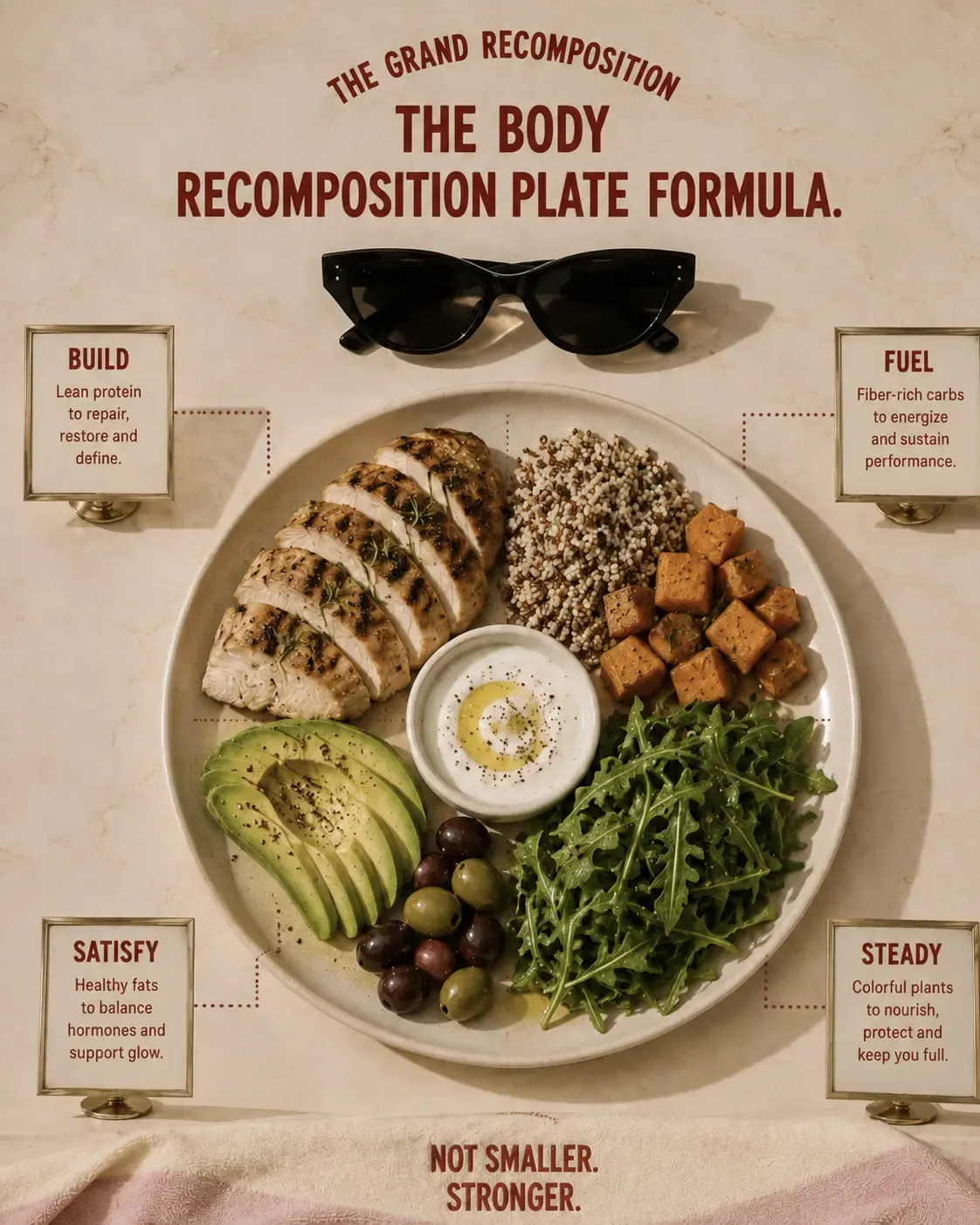
Body Recomposition Plate Formula
Here is the simplest nutrition formula:
Protein + fiber-rich carbohydrate + healthy fat + colorful plants
This structure supports muscle, energy, blood sugar, fullness, and meal satisfaction.
Example plates
Breakfast:
Greek yogurt, berries, oats, chia seeds, and walnuts
Lunch:
Chicken or tofu bowl with rice, greens, roasted vegetables, olive oil, and herbs
Dinner:
Salmon or lentils with potatoes, broccoli, salad, and tahini or olive oil
Snack:
Cottage cheese with fruit, boiled eggs with tomatoes, or hummus with vegetables
For a deeper food list, read The Best Foods to Support a Healthy Metabolism.
What to Eat Before and After Strength Training
You do not need complicated workout nutrition.
But if you are training for recomposition, fueling matters.
Before Training
A pre-workout meal or snack can help you feel stronger and more focused, especially if you train in the morning or after a long gap between meals.
Good options include:
-
Greek yogurt with fruit
-
banana with yogurt
-
eggs and toast
-
oats with protein
-
cottage cheese and fruit
-
rice bowl leftovers
-
smoothie with protein, fruit, and milk
After Training
After training, aim for protein and carbohydrates to support muscle repair and replenish energy.
Good options include:
-
chicken, rice, and vegetables
-
tofu, noodles, and greens
-
salmon, potatoes, and salad
-
Greek yogurt with berries and oats
-
eggs with sourdough and tomatoes
-
lentil soup with bread
-
cottage cheese with fruit and nuts
You do not need to eat immediately within minutes unless that suits your schedule. But having a protein-rich meal within a reasonable window after training is a helpful habit.
The goal is not to earn your food.
The goal is to support adaptation.

Common Mistakes Women Make With Body Recomposition
Body recomposition sounds simple, but a few common mistakes can slow progress.
- Eating Too Little
If calories are too low, training performance, recovery, hormones, and muscle retention may suffer.
Read Why Eating Less Is Not Always Better for Your Metabolism if this feels familiar.
- Not Eating Enough Protein
Many women underestimate how much protein they need to support muscle. A small amount at dinner is usually not enough.
- Doing Only Cardio
Cardio has benefits, but body recomposition requires resistance training. You need to give your body a reason to build or keep muscle.
- Changing the Plan Too Often
Recomposition takes time. Constantly changing workouts, calories, or meal plans makes it harder to see what is working.
- Fearing Carbohydrates
Carbohydrates can support training, energy, and recovery. The key is choosing supportive sources and pairing them with protein and fiber.
- Ignoring Sleep
Poor sleep can make cravings stronger, workouts harder, and recovery slower. Sleep is not separate from body composition.
- Measuring Progress Only by Weight
If you only watch the scale, you may miss strength, shape, energy, and measurement changes.
A Simple One-Day Body Recomposition Meal Example
This is not a strict meal plan. It is a simple example of how a recomposition-supportive day could look.
Breakfast
Greek yogurt with berries, oats, chia seeds, and walnuts
Coffee after food, if possible
Lunch
Chicken or tofu bowl with rice, roasted vegetables, greens, olive oil, lemon, and herbs
Pre-Workout Snack
Banana with cottage cheese
or sourdough with eggs
or Greek yogurt with fruit
Dinner
Salmon or lentils with potatoes, broccoli, salad, and tahini or olive oil dressing
Optional Snack
Hummus with vegetables
or boiled eggs with tomatoes
or cottage cheese with cinnamon and fruit
This kind of day gives your body protein, carbohydrates, fiber, healthy fats, and enough structure to support training and recovery.
It is not about perfection.
It is about repetition.
How Long Does Body Recomposition Take?
Body recomposition is usually measured in months, not days.
A realistic timeline depends on your starting point, training history, protein intake, sleep, stress, hormones, calorie intake, and consistency.
Some women notice changes in energy and strength within a few weeks. Visible changes often take longer.
This is normal.
Body recomposition is not a quick-fix approach. It is a long-term strategy.
And that is exactly why it works better for many women who are tired of dieting.
You are not trying to force your body into a short-term result.
You are building a body that can stay strong.

Related Reading
- How Much Protein Do Women Over 35 Really Need? — helps you set realistic protein targets for muscle and recovery.
- Why Eating Less Is Not Always Better for Your Metabolism — explains why recomposition usually needs enough food, not harsher restriction.
- A Simple Balanced Plate Method for Women Who Feel Overwhelmed by Nutrition — gives a simple plate structure for everyday recomposition meals.
Final Thoughts
Body recomposition for women is not about eating less and hoping your body becomes smaller.
It is about eating in a way that supports muscle, strength, energy, recovery, blood sugar, and gradual fat loss when appropriate.
The basics are simple, but not always easy:
Eat enough protein.
Strength train consistently.
Do not cut calories too aggressively.
Use carbohydrates wisely.
Include healthy fats.
Build balanced plates.
Sleep. Recover. Repeat.
This approach may be slower than a crash diet, but it is also more respectful.
It supports the body you want to live in — not just the body you want to see in a photo.
And for women over 35, that matters.
Because your goal is not simply to weigh less.
Your goal is to feel stronger, steadier, more capable, and more at home in your body.
That is the kind of change worth building.

Gentle note: This article is for educational purposes only and does not replace medical advice or individualized nutrition guidance. If you have a medical condition, history of disordered eating, hormonal concerns, diabetes, thyroid disease, digestive issues, or symptoms such as persistent fatigue, dizziness, irregular cycles, or rapid weight changes, speak with a qualified healthcare professional or registered dietitian.




















Community Notes
Join the conversation
Share a thoughtful note, question, or lived observation.